
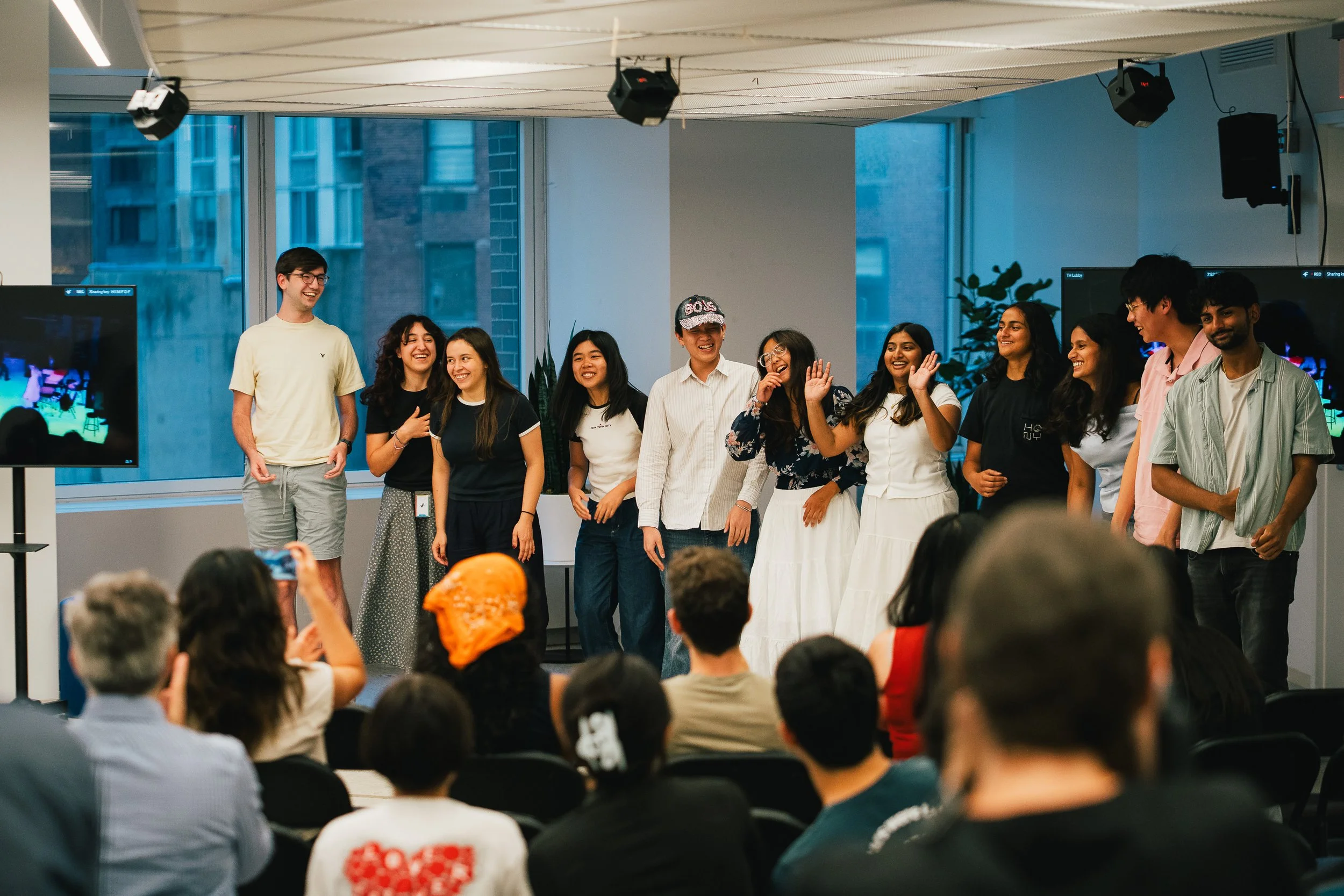
hackNY Fellows Class of 2025
hackNY was born 16 years ago to help make New York City a thriving home for emerging technologists. Over those 16 years, the city has flourished: new companies, new universities, new institutes around tech and data, a rapidly growing and maturing tech ecosystem. As hackNY has grown alongside it, we've worked to make New York City a community we'd actually want to be part of.
Over that same period, software has, as prophesied, eaten the world. Technology and data have had increasing impact on our personal, political, and professional realities, at a pace that keeps accelerating. That acceleration has had a tremendous impact on the careers of young technologists, and on their thinking about what it means to join a community of technologists in the first place.
Looking at the changes over the last 16 years, or the last three years, or even the last year, hackNY alumni have had cause to wonder and to doubt: what is the way to have the best and most positive impact on the tech community in New York City and beyond?
In revisiting that question, we wanted to build on explorations the alumni and the board have been making over the last few years around technology and public interest organizations. Especially over the last year, it's become clear that a small group of proven builders can have an outsized impact on mission-driven organizations for which technology has been only a small or nascent part of their operations.
Why now, and why hackNY
Inspired by the work of public interest technologists over the last decade, and by the larger pro bono movement in the legal community over the last century, the volunteer alumni and the board of hackNY decided to focus on expanding, democratizing, systematizing, and evangelizing for public interest technology.
In law, pro bono is real infrastructure. Firms track hours. Bar associations set expectations. Law schools build clinical programs around it. It took a hundred years to get there, but eventually it became part of the professional identity of being a lawyer. In technology, we don't have that yet. We've had some great successes with prior summer of good programs at hackNY. What we don't have is a systematic way to match skilled technologists with organizations that desperately need help but can't afford it.
hackNY alumni have been doing this kind of work informally for years: building data tools for public safety organizations, ed-tech groups like Cognitive Toybox, and CSforAll. Those efforts happened one at a time, without infrastructure behind them.
This summer, we're trying to build the infrastructure.
The hackNY Public Interest Lab
For Summer 2026, we're launching the hackNY Public Interest Lab (PIL): an organized effort to pair emerging technologists with public interest and civic organizations.
We're looking for technologists early enough in their careers that we think this can have a huge impact on their overall arc. Proven builders who can have a short, focused impact on public interest work. The fellowship is true pro bono: nights and weekends, no pay, no cost to the organizations we work with.
We'll be looking for:
Nonprofit and civic partners who have technical problems they haven't had the resources to solve
PIL fellows volunteering their skills to build real things: automations, data infrastructure, dashboards, websites
Focused summer program ending with a demo day where fellows present what they built so that other communities can build on lessons learned
Based on conversations with public interest technologists, educators, legal professionals, and legal educators (more on the broader tech bono concept at tech-bono.org), we think the right strategy for year zero is to pair technologists with beneficiary organizations, enter into focused research sprints, and document the process carefully in a way that benefits future cohorts and future organizations.
The halo effect
Our hope is that this has an effect beyond the pilot itself. Technologists already know their skills are powerful. What's missing is the infrastructure to direct that power toward the public good. But it could become one. Pro bono in law was ad hoc before it was institutional, and institutional before it was cultural. We're at the ad hoc stage for tech.
The long game is building a professional expectation. The short game is: this summer, a few nonprofits in New York City get the technical help they need, a few technologists get to use their skills for something that matters, and we find out whether this model works.
This is a community project
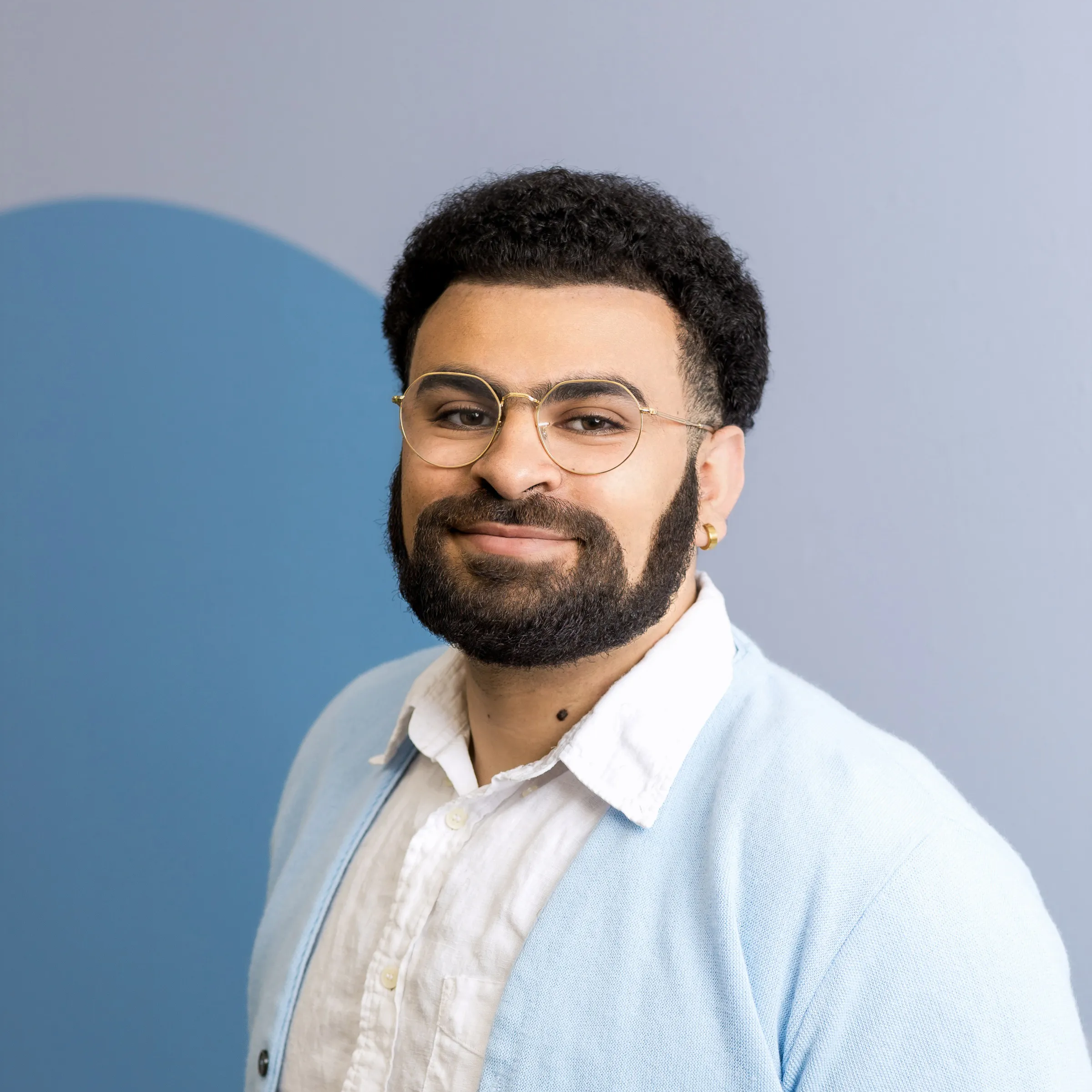
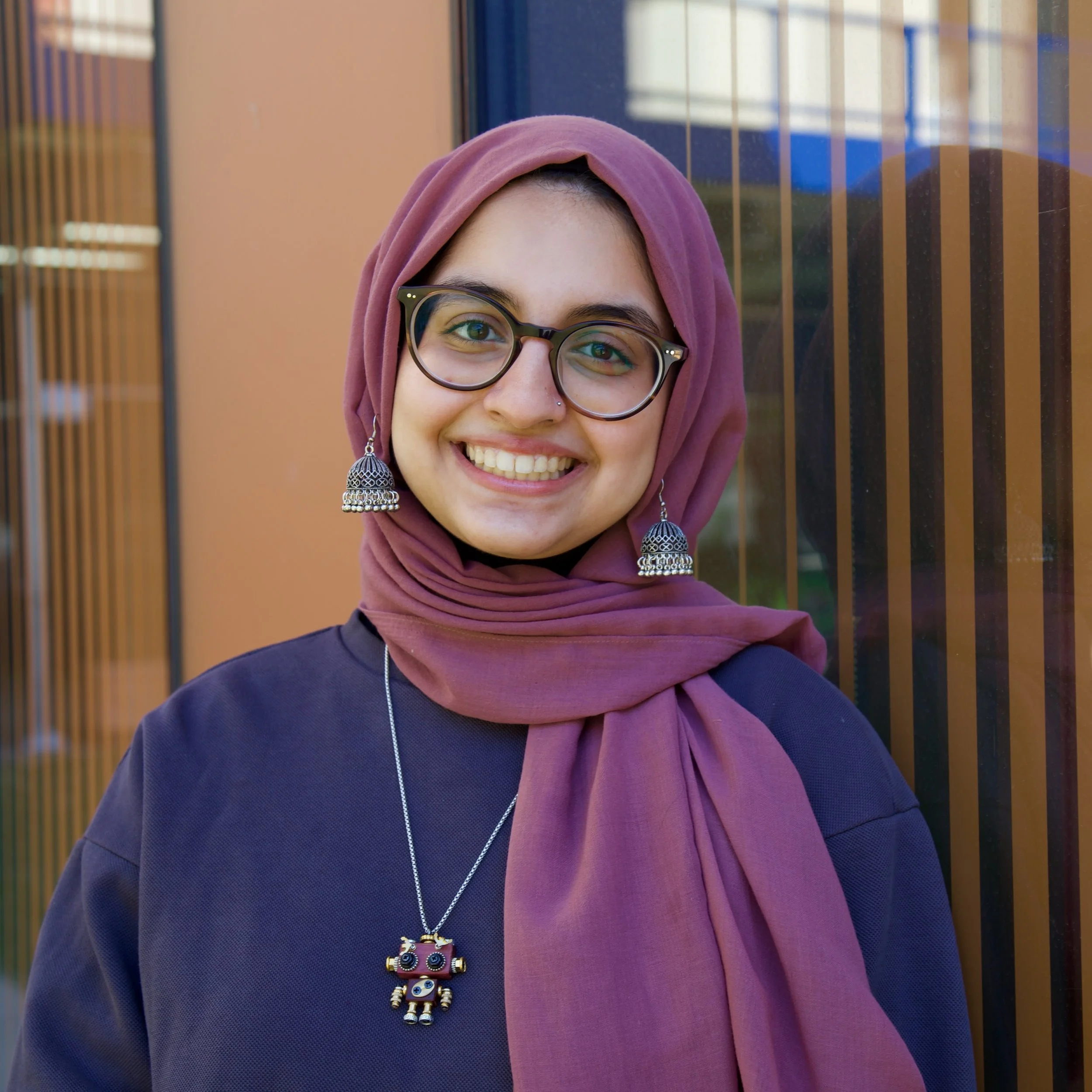
Ali Mohamad (left) and Anum Ahmad (right) will be running operations. The program design has already been shaped by feedback from dozens of alumni who responded when we floated the idea in February. Alumni have offered to mentor, host events, recruit fellows, and connect us with nonprofit partners. Several have already pointed us toward organizations they think would be a good fit.
The whole point of hackNY has always been that talented technologists can do more together than alone. This is just a new version of that.
How you can help
Nonprofit leads. If you know an organization in New York that could use technical help, send them our way. Here's the partner org form: https://bit.ly/hackNYPIL
Fellow recruitment. If you know an early-career technologist who would want to volunteer their skills this summer, point them to us.
Your honest reaction. We're sharing this with you before we go public. Tell us what we're getting right and what we can learn from!
Chris, Ali, and Anum
